Remote Cybersecurity Experts in Europe from Nigeria: A Governance-First Hiring Framework
Bart Młodkowski
Remote cybersecurity experts from Nigeria are becoming a strategic option for European startups and scaleups facing increasing infrastructure risk, regulatory pressure, and cloud complexity. As European companies expand their digital footprint, the need for experienced security engineers has grown faster than local hiring markets can supply.
Remote cybersecurity hiring from Nigeria refers to the structured hiring of vetted security engineers who operate within CET-aligned hours and integrate into European product environments under compliant employment frameworks. When implemented correctly, this model strengthens infrastructure resilience without inflating fixed payroll exposure.
Why Cybersecurity Hiring in Europe Is Under Pressure
European startups operate in increasingly complex environments:
Multi-cloud infrastructure across AWS, Azure, and GCP
GDPR-regulated data processing
API-heavy architectures
Distributed teams with remote access layers
Increasing ransomware and phishing threats
As digital maturity increases, so does attack surface.
However, experienced cybersecurity professionals remain scarce across the Netherlands, Germany, France, and the Nordics. Senior security engineers frequently command salaries exceeding €100,000 annually, and recruitment timelines can extend beyond three months.
For venture-backed startups, delayed security hiring can increase risk exposure and slow product releases.
Why Nigeria Is Emerging as a Security Talent Hub
Nigeria's expanding technology ecosystem has produced engineers with strong exposure to fintech-grade security systems, identity management, encrypted transaction layers, and high-availability infrastructure.
Key advantages include:
English fluency
CET-aligned collaboration
Exposure to global fintech and SaaS systems
Experience with distributed engineering environments
Nigeria's security professionals frequently work in payment platforms and transaction-heavy systems where compliance, encryption, and monitoring are foundational requirements rather than secondary concerns.
For a broader European remote hiring framework, review the remote developer hiring guide for European startups.
Core Cybersecurity Roles European Companies Hire Remotely
While "cybersecurity expert" is often used broadly, structured remote hiring requires clarity. Common roles include:
Cloud Security Engineer
Responsible for securing AWS, Azure, or GCP environments through IAM policy design, network segmentation, and encryption configuration.
DevSecOps Engineer
Integrates security into CI/CD pipelines, container orchestration, and deployment automation.
Penetration Tester
Conducts controlled vulnerability testing to identify infrastructure and application weaknesses.
Security Operations Center (SOC) Analyst
Monitors logs, identifies anomalies, and responds to potential incidents.
Application Security Engineer
Implements secure coding standards, code review processes, and vulnerability scanning protocols.
Maintaining role specificity ensures the hiring process aligns with real security needs rather than generic job titles.
How to Hire Remote Cybersecurity Experts in Europe from Nigeria
Structured remote recruitment reduces risk and improves integration quality.
Step 1: Define Security Scope and Ownership
Instead of hiring broadly, define measurable outcomes:
Reduce critical vulnerabilities by a defined target
Implement zero-trust access architecture
Establish continuous monitoring and incident response workflows
Clear ownership prevents ambiguity and protects production systems.
Step 2: Conduct Technical Vetting
Assessment should include:
Cloud security configuration scenarios
IAM policy design exercises
Incident response simulations
Secure CI/CD implementation review
Container security configuration
Structured technical validation protects against hiring misalignment.
Step 3: Structure Employment and Compliance
Security roles require careful employment structuring. Employer of Record frameworks ensure proper employment classification, IP assignment clarity, GDPR-aligned data access control, and defined escalation and reporting structures. For a closer look at how these structures work in practice, see the employer of record guide for Dutch tech companies.
Companies preferring phased validation can begin by testing security collaboration before scaling.
Cost Structure and Runway Impact
Senior cybersecurity engineers in Western Europe often exceed €100,000 annually including benefits and taxes.
Structured remote recruitment models enable European startups to rebalance cost exposure, expand security coverage earlier in growth stage, avoid payroll concentration risk, and preserve capital for product development and market expansion.
A deeper financial comparison is available in the guide to how Nigerian developers reduce IT hiring costs for European teams.
Governance: The Critical Differentiator
Remote cybersecurity hiring succeeds when governance remains within Europe.
Security integration requires:
Role-based access control
Documented permission policies
Structured incident response procedures
Defined audit logging standards
Regular security review cycles
When governance remains under EU oversight and execution capacity expands internationally, compliance and protection standards remain intact.
For Netherlands-specific operational structure, review the remote IT recruitment guide for Dutch businesses.
Security Integration Model: 30-60-90 Day Framework
A structured onboarding model protects infrastructure integrity.
First 30 days:
Controlled system access
Documentation review
Participation in security audits
60 days:
Ownership of a defined infrastructure segment
Implementation of monitoring improvements
90 days:
Measurable vulnerability reduction
Established security reporting rhythm
Phased integration reduces risk while accelerating protection capacity.
Key Advantages of Structured Remote Security Hiring
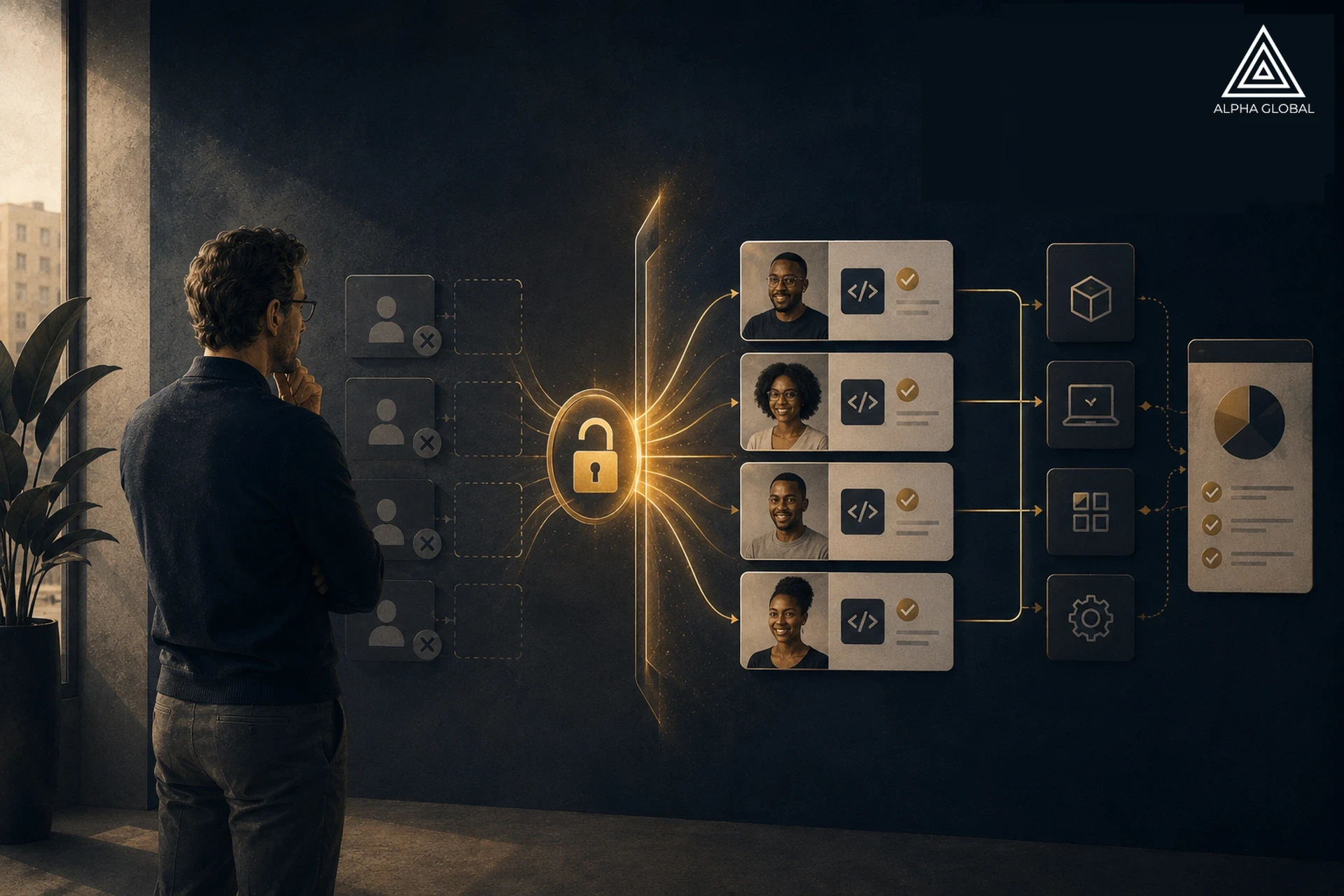
Remote cybersecurity experts from Nigeria integrate directly into sprint cycles, infrastructure planning, and security audits without functioning as detached vendors, when structured through formal employment frameworks. Key advantages include:
CET time zone overlap for real-time incident response
Experience in fintech-grade security environments
Lower payroll concentration risk compared to EU-only hiring
Structured compliance alignment under GDPR frameworks
Local vs Offshore vs Structured Remote Security Hiring
European startups evaluating cybersecurity expansion typically compare three options: hiring locally within the Netherlands or EU, engaging traditional offshore vendors, or structured remote recruitment under EU-aligned governance.
Factor | Local EU Hiring | Traditional Offshore Vendor | Structured Remote Nigeria |
|---|---|---|---|
Recruitment speed | Slow (2–4 months) | Moderate | Fast (10–14 days) |
Salary concentration | High | Variable | Controlled |
Governance control | Full | Limited | Full, under EU oversight |
Long-term integration | High | Low to moderate | High |
Compliance alignment | Strong | Often unclear | Structured under EOR |
Local-only hiring provides proximity but introduces extended recruitment timelines, high salary concentration risk, and limited scalability in saturated markets. Traditional offshore vendor models often introduce limited ownership, rotating personnel, and weak integration into product teams. Structured remote recruitment offers a balanced alternative: governance remains in Europe, execution scales internationally, and accountability is preserved through compliant employment frameworks.
Cybersecurity Workforce Gap in Europe
European companies continue to face strong competition for security talent, especially in cloud security, DevSecOps, and compliance-focused engineering. This structural deficit explains why recruitment cycles are prolonged and salary benchmarks continue rising across the Netherlands and wider EU markets.
Embedding remote cybersecurity experts early mitigates this shortage without exposing companies to unsustainable payroll expansion.
Frequently Asked Questions
Is remote cybersecurity hiring secure?
Security depends on process design, not geography. Strict access controls, encrypted communication channels, and documented audit trails maintain EU compliance regardless of where an engineer is based.
How quickly can remote security engineers be onboarded?
Under structured pipelines, onboarding can often occur within 10–14 days depending on role complexity and decision speed.
Does remote hiring reduce security quality?
No. Quality depends on vetting, governance, and performance management discipline rather than physical location.
Is this model suitable for early-stage startups handling sensitive data?
Yes, when access is structured through role-based controls and documented permission policies from day one. Governance design, not company stage, determines whether sensitive data can be handled safely.
How is this different from a traditional offshore security vendor?
A vendor typically hands off both execution and oversight, which weakens long-term ownership and incident accountability. Structured remote recruitment keeps governance, escalation paths, and compliance oversight inside Europe while execution capacity expands internationally.
Can a company validate a security engineer before a long-term hire?
Yes. A structured Pilot Program lets companies observe technical vetting, incident response quality, and collaboration under real working conditions before committing to a permanent role.
Cybersecurity as Growth Infrastructure
Cybersecurity is no longer a reactive function. For SaaS, fintech, logistics, AI-driven platforms, and data-heavy startups, it is growth infrastructure. European companies that delay security hiring expose themselves to operational disruption, regulatory risk, and reputational damage.
Rather than hiring security engineers only after an incident occurs, startups increasingly embed cybersecurity experts directly into product teams from the beginning, protecting cloud-native architectures from early-stage misconfiguration, implementing secure DevOps pipelines from day one, and aligning with GDPR requirements proactively rather than retrofitting compliance later.
This fits into a broader shift in how European startups expand engineering capacity generally. Structured correctly, remote cybersecurity experts operate as core team members, not external auditors.
Expanding Security Coverage Without Diluting Role Focus
Remote IT talent outsourcing for European companies often includes adjacent technical roles such as DevOps engineers, backend developers, and data engineers alongside security specialists. Maintaining clear role ownership matters for both SEO and operational clarity. This page owns cybersecurity-specific hiring intent, and adjacent roles should be evaluated separately to ensure precise technical alignment.
Companies seeking broader structured remote hiring support can review Alpha Global's managed remote hiring model.
Long-Term Strategic Impact
Embedding remote cybersecurity experts early changes the risk profile of European startups. Instead of reacting to compliance audits or incident reports, companies build proactive security architecture aligned with scaling goals.
For venture-backed startups in Amsterdam, Rotterdam, Berlin, or Paris, this reduces regulatory uncertainty and increases investor confidence. Security maturity becomes a competitive differentiator rather than a defensive necessity.
Remote cybersecurity experts in Europe from Nigeria provide scalable protection capacity under compliant governance frameworks. When implemented deliberately, this model strengthens resilience, preserves runway, and supports sustainable scaling.
For a direct strategic discussion, book a discovery call.
ABOUT ALPHA GLOBAL
Alpha Global helps Dutch and European companies build high-performing engineering teams through remote and relocation models. With offices in Rotterdam and Lagos, we manage recruitment, compliance, payroll, and onboarding under one structured framework.
Typical hiring time: 21 days.
Book a Strategy Call




Contact & Legal
Alpha Global V.O.F.
KvK 95018050
Rotterdam, Netherlands
✉️ office@alpha-global.org
+31 68 555 84 25

© 2026 Alpha Global V.O.F. All rights reserved.